REVIEW · KO PHI PHI DON
Phi Phi Islands Adventure: Ferry, Snorkeling & Island Lunch
Book on Viator →Operated by I Asia Thailand · Bookable on Viator
Phi Phi Islands are a long-day dream for many. You get Maya Bay scenery plus included snorkeling gear, and the day also lands you on Phi Phi Don for a buffet lunch that’s actually worth the wait. The main drawback to consider is that the schedule can stretch when sea and tide conditions change, so your time on shore may feel tighter than you expect.
This tour works best when you want one classic Phi Phi hits-you-all-in-a-day itinerary, without stress. You’ll have an English-speaking guide on the boat, onboard tea/coffee/snacks, and an organized flow from viewpoint to viewpoint—plus the company gives you a mobile ticket and pickup options for many hotels.
I also like that it’s capped at a maximum of 300 people, which helps keep it from feeling totally chaotic. Still, if you’re picky about long boat time or you strongly prefer cold drinks, plan ahead—what’s included is snacks, not a full beverage service.
In This Review
- Key things I’d circle before you go
- Phuket Morning to Phi Phi Don: What the Ferry Day Feels Like
- Maya Bay and Its Cliff-Protected Reef: Your Time on Shore and in the Water
- Snorkeling Logistics: Mask, Snorkel, and Why Long-Tail Boats Matter
- Pileh Lagoon and Island Hopping Timing (May to Oct Notes)
- Koh Phi Phi Don on Foot: Two Hours on Limestone Paradise
- Viking Cave (Tham Phaya Nak): Boat Paintings Under Limestone Cliffs
- Lunch on Phi Phi Don: Buffet Value With Beach-Adjacent Energy
- Price and Class Choices: What $55.06 Really Buys
- Weather, Tide, and Why Your Day May Run Differently
- Who Should Book This Phi Phi Ferry and Snorkeling Day (and Who Shouldn’t)
- Should You Book the Phi Phi Islands Adventure by Ferry, Snorkeling & Island Lunch?
- FAQ
- What time does the Phi Phi Islands by Ferry tour start?
- How long is the ferry ride from Phuket to the Phi Phi Islands?
- Is pickup available, and are there extra transfer charges?
- Do I need to pay a national park fee?
- What snorkeling gear is provided?
- How does snorkeling work for Standard and First Class?
- Will the itinerary change if the weather is rough?
Key things I’d circle before you go
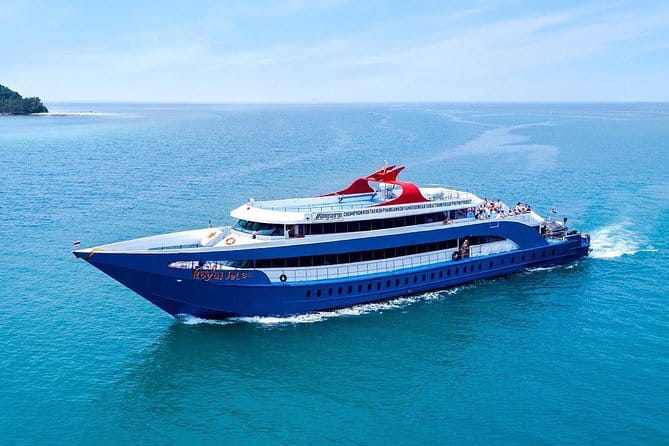
- Andaman Sea ferry time included: About 90 minutes across, plus scenic onboard views on the way to the islands.
- Maya Bay’s reef inside the cliffs: 100-meter-high limestone cliffs shelter the bay, and snorkeling can be directly off an iconic sandy spot.
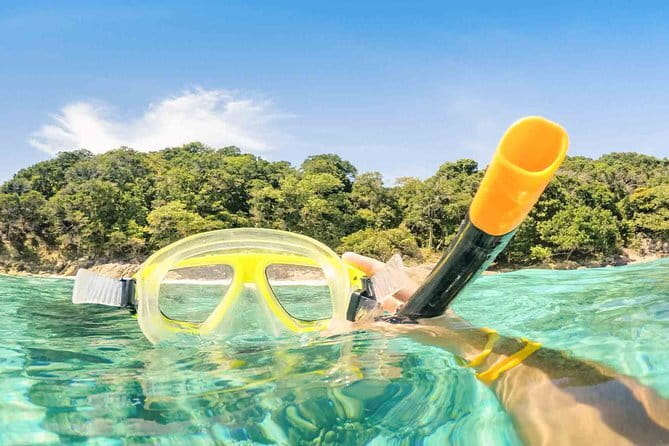
- Snorkeling gear is provided: Mask and snorkel come along with the tour.
- Long-tail boat snorkeling for Standard/First: Your class affects how you reach the snorkel areas.
- Viking Cave (Tham Phaya Nak) is a quick stop: About 20 minutes, with famous boat-like cave paintings.
- Phi Phi Don lunch is built in: A buffet-style island lunch on the largest island, paired with snacks.
Phuket Morning to Phi Phi Don: What the Ferry Day Feels Like
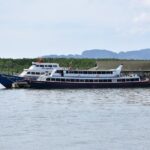
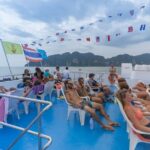
The day starts at 8:30am from Phuket, and the core transport is a ferry ride that’s about 90 minutes each way. That stretch matters more than it sounds, because it sets the tone: you’re not just “transferring,” you’re riding the Andaman Sea while the coast slips away behind you.
Pickup is offered, but your hotel location can affect surcharges. In general, pickup charges apply outside Phuket Town, Patong, Kata, and Karon, and there are specific per-van or per-person fees for places like Layan, Naithon, Maikhoa, Ao Por, and Phuket Airport. If you’re unsure, confirm your exact pickup zone when booking so you don’t get surprised later.
On the boat you get an English-speaking guide and refreshments onboard: tea/coffee/snacks. The tour also uses a mobile ticket, which is handy when you’re trying to keep your morning simple.
One more practical thing: docking is weather/tide-dependent. The company says sea conditions may change whether the ferry docks at Phi Phi Don or whether you switch to a long-tail boat to reach the island. It’s not a reason to cancel—just a reason to travel with patience.
Maya Bay and Its Cliff-Protected Reef: Your Time on Shore and in the Water
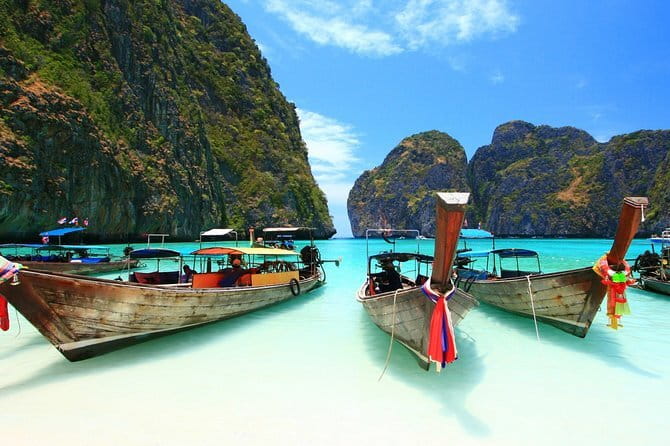
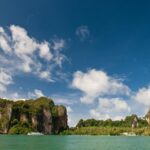
Maya Bay is the kind of place you understand instantly: limestone cliffs rise up around the bay, sheltering it on three sides. The tour highlights how the shoreline has multiple small beaches, and some only show up at low tide. When the tide is cooperating, you get that classic mix of soft white sand and clear, reefy water.
The bay is also described as being one big reef under the water, with colorful coral and fish you can spot while snorkeling. That matters because you’re not searching for a “spot”—the snorkeling area is tied to the bay itself, so you can enjoy the underwater part without feeling like the boat simply drops you off and disappears.
Maya Bay is all about short, focused time on the ground, then right back to water viewing. If you love “look, snorkel, photos, repeat,” this stop is built for you. If you prefer long beach hangs with zero movement, you may wish you had more standalone beach time.
Snorkeling Logistics: Mask, Snorkel, and Why Long-Tail Boats Matter
Snorkeling gear is included: you’ll get a mask & snorkel. The key detail is how you reach the snorkel sites. For Standard Class and First Class, snorkeling is done by long-tailed boat.
Long-tail transfer is common in Thailand, but it can feel different from big-boat snorkeling. It usually means quick hops to the best water, and you may spend a bit of time stepping between boats and settling in. If you’re prone to motion sickness, that boat hop component is worth factoring into your day.
Your class may also affect fees. The tour notes that the National Park Fee is included for Premium passengers, while Standard and First require you to pay during the tour (400-baht adult / 200-baht child). That can influence your total cost and how smoothly your day feels at the start of the island time.
Quick personal tip: bring a small dry bag or zip pouch for your phone and essentials. You’ll be handling gear and getting on and off boats, and dry storage saves you from stress.
Pileh Lagoon and Island Hopping Timing (May to Oct Notes)
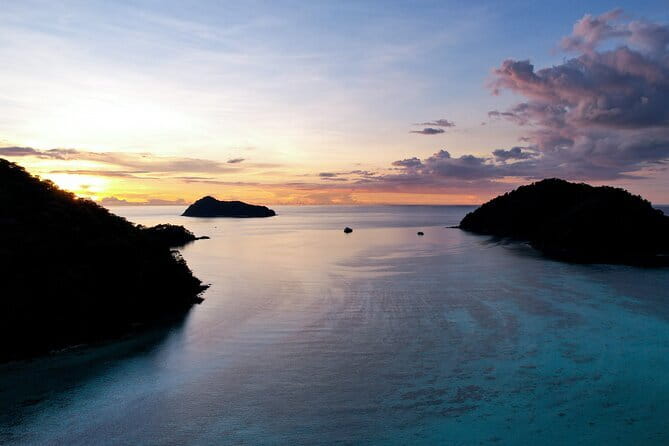
Beyond Maya Bay, the tour description also calls out Pileh Lagoon as part of the scenic island-hopping experience. That area is known in local itineraries for calm-water scenery, and on this kind of day, you’re there to see it from the best angle the schedule allows—not to turn it into a whole extra excursion.
There’s also an important seasonal note: during May to October, sightseeing onboard at Phi Phi Ley Island will be done in the afternoon before the return trip to Phuket. In plain terms, the day’s order can shift with the calendar, and that affects when you get the best light for photos and when you’re sitting on boats between stops.
If you’re the type who plans your photos around the sun, remember that your timing may depend on the season and how the day unfolds once you’re out there.
Koh Phi Phi Don on Foot: Two Hours on Limestone Paradise
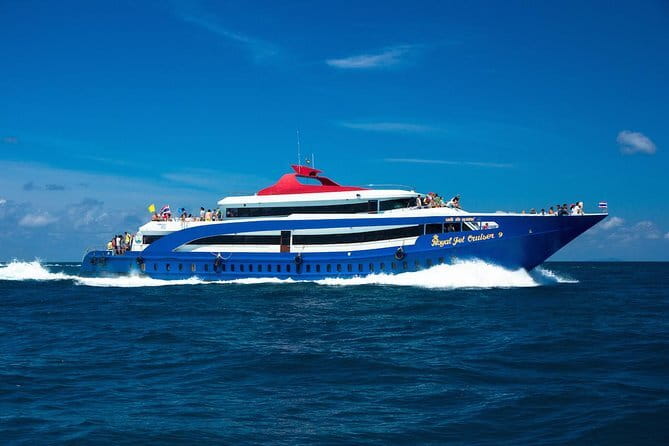
Phi Phi Don is the largest of the islands, and it’s mostly limestone. The description adds a fun detail: it’s almost split into two islands, but a strip of flat land connects them. That strip is where you’ll find the largest settlement and most of the resorts.
The tour gives you about 2 hours on Phi Phi Don, so you can do the simple things that make island days feel real: walk around, get your bearings, and find a nice angle for photos above the water. This stop is also where lunch ties in, so you can go from sightseeing mode into food mode without feeling rushed across the whole island.
Because the time on Phi Phi Don is limited, I’d treat those two hours as an “island reset,” not a long exploration day. If you want deeper walking time or beaches on your own, this tour is better as a sampler than as your only Phi Phi stop.
Viking Cave (Tham Phaya Nak): Boat Paintings Under Limestone Cliffs
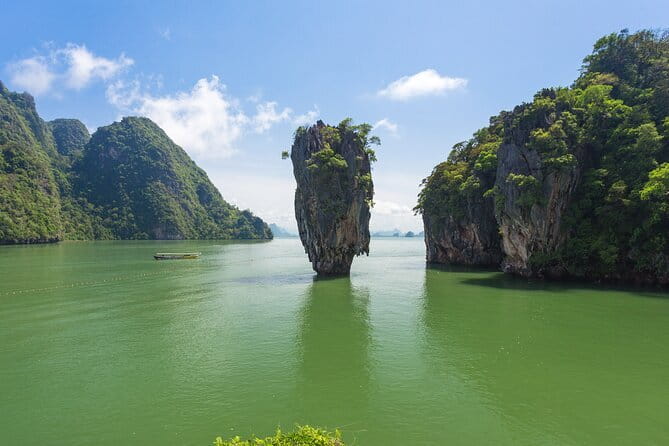
Viking Cave is listed as a standout quick stop on Koh Phi Phi Leh. It sits at the bottom of a tall limestone cliff on the northeastern side, and it’s known in Thai as Tham Phaya Nak.
The name Viking Cave comes from paintings on the cave’s walls. The tour description says the paintings represent various types of boats, including what resembles a Scandinavian drakkar. The notes also point out the paintings may be relatively recent, possibly made by sailors sheltering during a storm.
You get about 20 minutes here, and admission is free per the stop description. That short time is a good fit if you like “brief but specific” cultural sights—enough to see what the place is, without turning the day into a museum crawl.
Lunch on Phi Phi Don: Buffet Value With Beach-Adjacent Energy
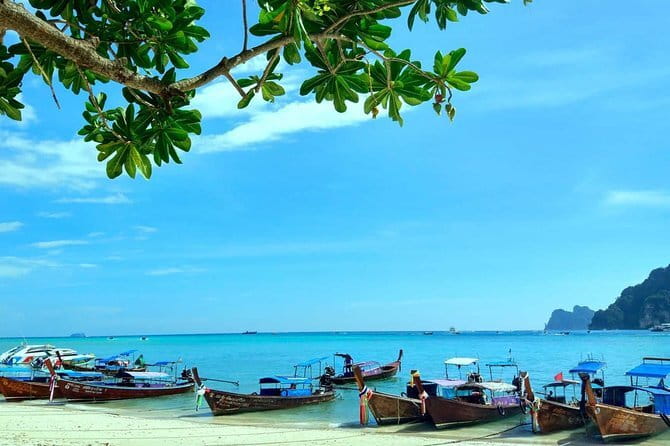
Lunch is a big part of why this tour feels like a full day, not a stop-and-go hop. You’ll get a buffet lunch with snacks at a beachfront restaurant on Phi Phi Don.
This is also where I’d watch your expectations. A buffet means choice, but not a custom meal. Still, the lunch is described as very good in the experience feedback I’ve seen, and that’s the right kind of score for a day like this—when you’re already tired from boats, you want food that hits and a meal that doesn’t drag.
Plan to eat like you’re fueling up for snorkeling and walking later. If you tend to under-eat on tour days, this is the point to correct that.
Price and Class Choices: What $55.06 Really Buys

At $55.06 per person, this is a fairly straightforward Phi Phi day trip price. The schedule also appears popular: it’s commonly booked about 50 days in advance, which is a sign that people plan Phi Phi early and then lock it in.
Class choice matters because it affects both cost at checkout and park fees:
- Standard/First: the National Park Fee isn’t included, and you pay during the tour (400-baht adult / 200-baht child).
- Premium: the National Park Fee is included.
Snorkeling method also changes for Standard/First: snorkeling is done by long-tailed boat. Premium may be handled differently, but the data you’re given clearly states the long-tail approach for Standard/First, so that’s the one you can count on.
One more practical note: you might want to compare what’s included versus what you’ll pay later in cash. If you don’t want to think about the national park fee on the day, Premium can be the simpler option. If you’re fine paying the park fee during the tour and you want to keep costs controlled, Standard/First can still make sense.
Weather, Tide, and Why Your Day May Run Differently
This is Thailand, and the Andaman Sea has its own opinions. The tour states that weather and sea conditions determine docking at the Phi Phi Don pier or whether you take a long-tail boat to reach the island.
It also says the company won’t be responsible for changes to the program due to weather, tide, sea conditions, accidents, or other factors that affect safety and comfort. In those cases, no refunds are offered.
That means you should mentally set your expectation as: this is a plan, not a guaranteed script. If you’re the type who hates schedule uncertainty, you might feel stressed. If you can handle “safety first, program adjusts,” then the day is much more enjoyable.
If you can, pack a small bag with essentials for a long day. The more you’re prepared, the less the schedule changes bother you.
Who Should Book This Phi Phi Ferry and Snorkeling Day (and Who Shouldn’t)
Most people can participate, and service animals are allowed. It’s also an easy tour concept for families in the right age range:
- Children 3 and younger are complimentary.
- Children 11 and younger must be accompanied by a paying adult.
That said, the tour notes some parts of the program are not suitable for pregnant ladies, seniors, and people with health problems. The “why” is easy to guess from the format: boat time, transfers, and getting on and off small craft can be hard on some bodies. If that includes you or someone in your group, it’s smarter to choose a less physically demanding day.
If you want an island lunch, classic Phi Phi viewpoints, and snorkeling without organizing your own boats, this tour fits well.
Should You Book the Phi Phi Islands Adventure by Ferry, Snorkeling & Island Lunch?
I’d book this when you want a single-day Phi Phi highlight reel with ferry transport, snorkeling gear included, and lunch already handled. It’s a strong choice for first-timers because you’ll see major icons like Maya Bay and the Viking Cave boat paintings, plus time on Phi Phi Don where life on the island feels grounded.
I’d also lean toward Premium if you want to avoid thinking about the national park fee on the day and you like the idea of paying once, then relaxing. If Standard/First is your budget pick, just remember snorkeling involves long-tail boats, and you’ll be paying the national park fee during the tour.
If you’re sensitive to boat time or you’re hoping for a long, slow beach day with lots of swimming breaks, consider whether you want a more flexible plan. This one is designed for movement, timing, and getting the key sights checked off.
FAQ
What time does the Phi Phi Islands by Ferry tour start?
The start time is 8:30am.
How long is the ferry ride from Phuket to the Phi Phi Islands?
The ferry ride from Phuket to the Phi Phi Islands is approximately 90 minutes long.
Is pickup available, and are there extra transfer charges?
Pickup is offered, but there are surcharges if your pickup/drop-off is outside Phuket Town, Patong, Kata, and Karon. The tour also lists larger fees for hotels farther out (including 1000-baht per/van per way from Layan, Naithon, Maikhoa, Ao Por, and Phuket Airport) and 100-baht per pax/per way for several other areas.
Do I need to pay a national park fee?
For Standard Class and First Class, you must pay a national park fee during the tour: 400-baht for adults / 200-baht for children. For Premium, the national park fee is included.
What snorkeling gear is provided?
You get snorkeling equipment (mask & snorkel) with the tour.
How does snorkeling work for Standard and First Class?
For Standard Class and First Class, snorkeling is done by long-tailed boat.
Will the itinerary change if the weather is rough?
Yes. Weather and sea conditions can determine docking and may cause changes for safety and comfort. The tour notes that no refunds are given for program changes caused by weather, tide, sea conditions, accident, or other reasons that modify the program.