REVIEW · VANCOUVER
Vancouver False Creek Ferry Tour
Book on Viator →Operated by False Creek Ferries · Bookable on Viator
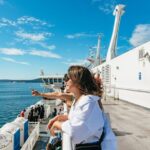
An electric ferry changes how you see Vancouver. The Vancouver False Creek Ferry Tour is a short, quiet cruise on sheltered water that threads together marinas, waterfront neighborhoods, and big-city history without feeling like a long chore. You start and end at Granville Island, then you can make a half-day out of it by grabbing snacks at the Public Market before or after.
What I like most is how easy it is to actually hear the story being told, since the boat runs on electricity and stays smooth and calm. I also like the small group feel, which makes it simpler to ask questions when the captain stops talking and starts pointing out landmarks. One drawback to consider: if you want a laser-focused history lesson, you might notice the narration can drift into topics like local real estate, and on some departures the commentary may be harder to follow if English isn’t your first language.
In This Review
- Key highlights worth marking on your calendar
- Why this electric False Creek cruise feels different than a bus tour
- Granville Island start point: where to meet and what to do nearby
- False Creek in one hour: marinas, condos, and the calm ride
- The Expo 86 footprint on the east side: older waterfront plans, reused
- The 2010 Winter Olympics legacy: athletes village turned into community
- Out toward English Bay: anchored ships and a west-end viewpoint
- Guides on board: what Captain Rusty and others tend to do well
- Price and value: is $22.52 for an hour on the water fair?
- Timing, weather, and how rainy days usually work out
- Who should book this ferry tour—and who might skip it
- Should you book the Vancouver False Creek Ferry Tour?
- FAQ
- How long is the Vancouver False Creek Ferry Tour?
- Where do I meet, and does the tour end there too?
- What does it cost?
- Is the tour offered in English?
- Is it a large tour group?
- What should I expect for weather?
Key highlights worth marking on your calendar
- Granville Island start and finish keeps things simple, and you can pair it with shopping and bites at the Public Market
- Electric ferry = quieter ride so narration is easier to catch on the water
- Max 10 travelers means you’re not swallowed by a crowd
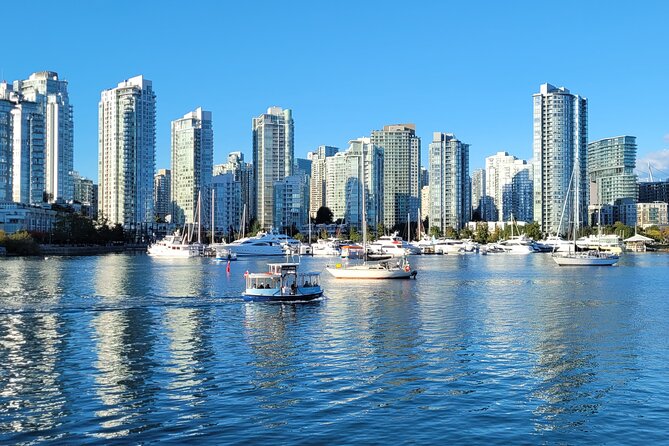
- False Creek in one hour covers marinas, condos, and the waterfront’s big development phases
- East-to-west views include the former Expo 86 pavilion area and out toward English Bay
- Captain-led narration often features names like Captain Rusty, with others such as Graeme or Graham on some departures
Why this electric False Creek cruise feels different than a bus tour
A ferry in Vancouver works like a shortcut: you skip traffic vibes and get instant waterfront context. On this tour, the boat moves through False Creek’s sheltered waters, which usually means a smoother ride than you’d expect on open sea routes. The whole thing is timed to stay manageable—about one hour—so you can fit it between museum time, coffee stops, or a morning exploring Granville Island.
This is also the kind of sightseeing that doesn’t require stamina. You’re seated, the boat glides, and you’re free to look up at buildings and down at the waterline without switching locations every ten minutes. I especially like that the electric motor keeps the atmosphere relaxed, so the captain’s narration lands better than it does on noisier boats.
Granville Island start point: where to meet and what to do nearby
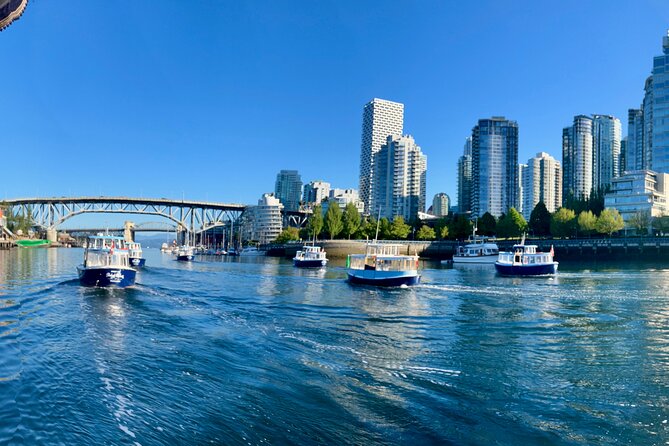
Your tour starts at 1699 Johnston St, Vancouver, and it ends back there. That matters because Granville Island is one of the easiest “pre- or post-game” zones in the city. If you arrive early, you can walk into the Public Market area and browse before you board—handy if you want a snack strategy for later.
A practical tip: plan your timing so you’re not sprinting. One hour on the water goes fast, and boarding timing gets smoother when you’re already in the area and not trying to solve transit or parking at the last second. Since this activity is near public transportation, you can keep your logistics simple and let transit do the heavy lifting.
False Creek in one hour: marinas, condos, and the calm ride
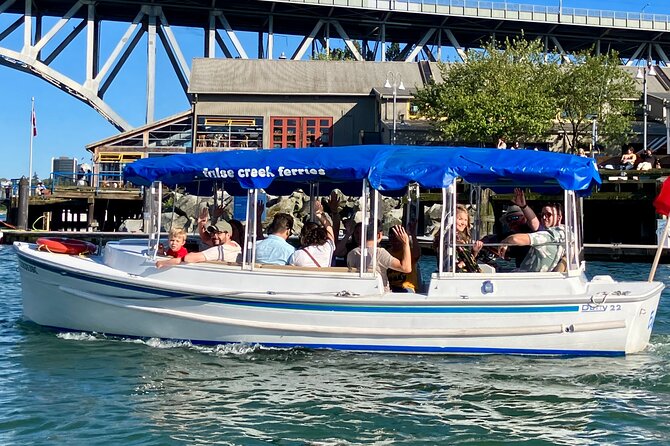
Once you’re out on the water, you’ll cruise around False Creek while the boat gives you a front-row angle on how the waterfront is built. The route is designed to show the variety of shoreline life: boats at marinas, big condo developments, and the overall mix of residential waterfront and working harbor energy.
Because the boat is electric, it tends to feel calm in a way that surprises people who expect a typical motorboat experience. The payoff is that you can hear the captain better and keep your attention on the scenery instead of fighting background noise. If you’re the sort of person who likes to look out the window on trains but wants actual narration, this fits.
You’ll also move through a “sheltered” section that helps you relax. Even if the day isn’t perfect, being out on the water tends to feel like a reset compared to walking blocks and checking your phone every few minutes.
The Expo 86 footprint on the east side: older waterfront plans, reused
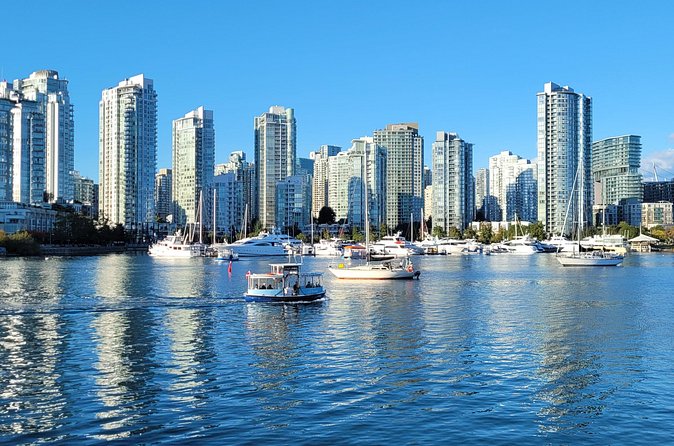
One of the most interesting parts of this cruise is how it shows you the waterfront’s timeline, not just a single snapshot. On the east side of False Creek, you pass by a former Expo 86 pavilion, a reminder that this area has been reinvented before. You’re not just seeing buildings—you’re seeing decisions made decades ago and how they shape what visitors experience today.
Seeing this from the water helps because the shoreline layout makes the transformation easier to understand. You get to watch how development hugs the water, how open space and structures are arranged, and how today’s lifestyle fits into what used to be a major world event site. If you like “how did this place become this?” questions, this segment is a good match.
The 2010 Winter Olympics legacy: athletes village turned into community
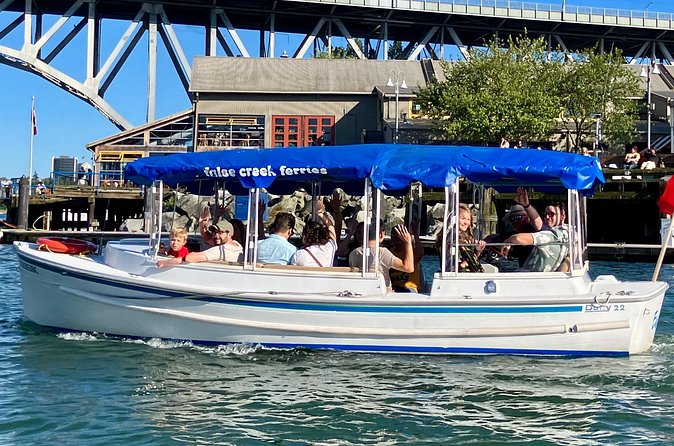
The cruise also takes you past the area connected to the 2010 Winter Olympics. What used to be the athletes’ village has since become a seaside community, and the tour gives you a moving viewpoint on that shift.
This is the kind of detail that’s easy to miss when you’re only looking from streets. From the ferry, you can spot how the waterfront setting supports everyday life: where buildings face the water, how the shore connects, and how the area is designed for long-term use rather than short-term hosting.
I like this part because it gives the cruise more meaning than sightseeing alone. You’re not just collecting photos; you’re getting a quick sense of how major events can leave behind neighborhoods that keep working years later.
Out toward English Bay: anchored ships and a west-end viewpoint
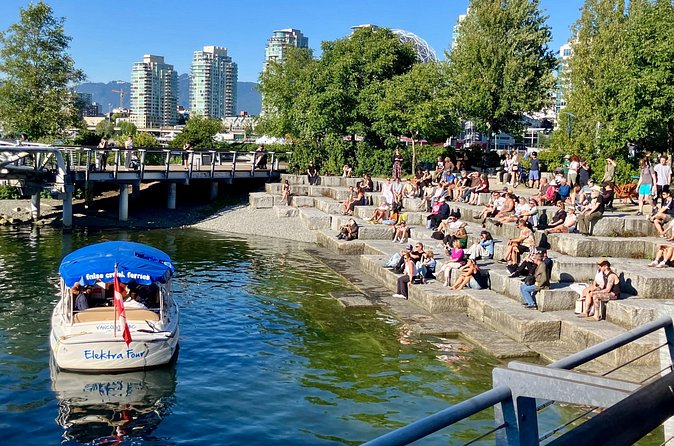
As the ferry nears the western end of False Creek, the scenery opens up toward English Bay. This is where the tour shifts from “inside False Creek” to “what’s beyond it,” giving you a different kind of waterfront picture.
One specific visual you can look for is the view of ships at anchor in English Bay. It’s a small moment, but it changes the mood. Instead of focusing only on condos and marinas, you get a hint of the wider coastal world Vancouver sits beside.
Even if you’re not a nautical person, this west-end stretch is worth paying attention to because it rounds out the route. The hour stops feeling like a straight line and starts feeling like a mini tour of the city’s water edges.
Guides on board: what Captain Rusty and others tend to do well
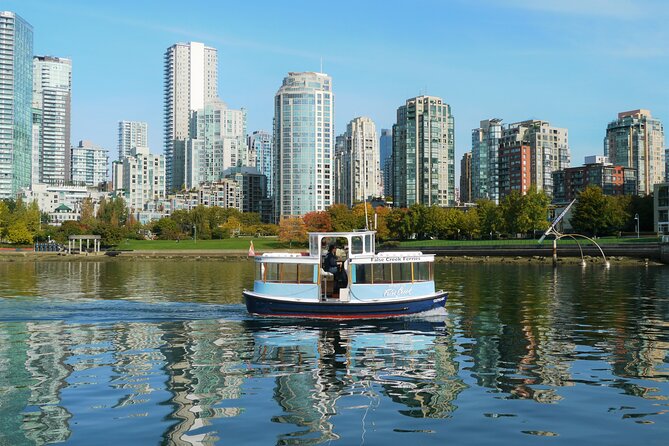
The narration is a big part of the value here. Many departures are led by captains and guides who keep things friendly and animated, with names like Captain Rusty showing up in feedback again and again. Other guides on some trips include Graeme and Graham, and the common thread is that the commentary ties the sights to real context.
Here’s what that means for you in plain terms:
- You’re not stuck with a monotone script. The tone is often lively enough to stay engaged.
- The electric boat helps you follow the story without craning your ear the whole time.
- The small group size makes it easier for the captain to treat the trip like a conversation, not just a performance.
One caution, based on real experiences: on some departures, the captain’s talk can veer into topics like real estate. If your priority is strictly water history and waterfront development, that might be slightly off your preferred track. If that doesn’t bother you, the relaxed format can still make the hour fly by.
Price and value: is $22.52 for an hour on the water fair?
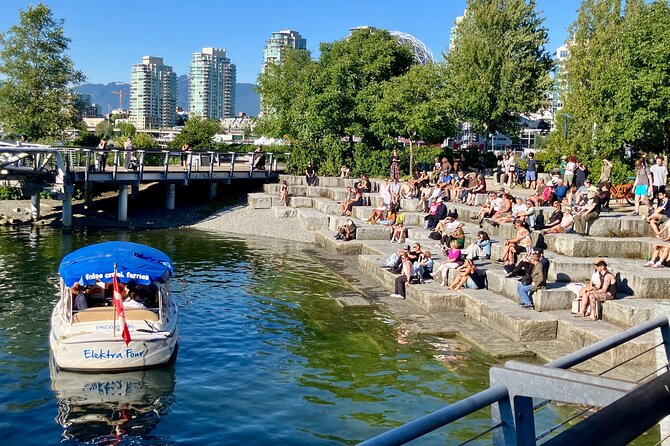
At $22.52 per person, this tour sits in the “worth it if you like water views” category. It’s not a splurge, but it’s also not the kind of deal where you expect it to be bare-bones. You’re paying for a one-hour narrated ride on an electric ferry, with GST included.
To judge value, I look at three things:
- Time efficiency: One hour is long enough to cover multiple waterfront zones, but short enough to fit around other plans.
- Comfort and sound: The electric boat is quiet enough that narration is actually usable.
- Local context: The captain’s commentary adds meaning, turning the sights into something you remember.
If you already have a full day of museums and want something that resets you, this hits that role nicely. If you hate guided tours and prefer to wander without any structure, you might prefer a self-guided walk. But if you want quick context without a bus, the price feels reasonable.
Timing, weather, and how rainy days usually work out
This is a “water day” activity, so you should expect weather to matter. The good news is that the operator runs in bad weather conditions like rain on most days. The note you should keep in mind is that it can be affected by poor weather, in which case you’ll be offered a different date or a full refund.
What I recommend for your planning:
- If it’s forecasted to be rainy but not dangerous, you’re usually fine to go. Rain can be part of the charm on the waterfront.
- If conditions look genuinely rough, be ready for the operator’s weather decision.
- Dress for being outside on the water, even if you think it will only be a quick hour.
Also, one small but real benefit: because it’s sheltered water in False Creek, you’re not likely to get the same rolling ride you might on more exposed routes.
Who should book this ferry tour—and who might skip it
This tour is a great fit if you:
- want big scenery in a short time
- like water views but don’t want a full-day commitment
- enjoy guided narration and want local context without doing research beforehand
- travel in a group size that benefits from the max 10 travelers format
It might be less ideal if:
- you want a highly structured lecture with zero topic drift
- you’re very sensitive to language clarity and struggle when narration is hard to follow
- you prefer independent exploring with no guide at all
For families, couples, and solo travelers, it’s flexible because the duration is short and the ride tends to feel comfortable and easy.
Should you book the Vancouver False Creek Ferry Tour?
If you want an efficient, low-effort way to understand Vancouver’s waterfront, I think it’s a strong booking. The combination of electric quiet, one-hour timing, and captain-led narration makes it a practical choice for nearly any itinerary. Start at Granville Island, and you’ll naturally end the tour in a place that’s easy to keep exploring.
I’d book it especially if you’re the kind of traveler who likes seeing how a city works from the water, not just from sidewalks. If your ideal tour is a strict history lecture with precise pacing, you might want to go with expectations adjusted—but overall, this one earns its high recommendation for a simple reason: it makes False Creek feel close, calm, and worth talking about.
FAQ
How long is the Vancouver False Creek Ferry Tour?
The tour runs for about 1 hour.
Where do I meet, and does the tour end there too?
You meet at 1699 Johnston St, Vancouver, BC V6H 3S2, Canada, and the tour ends back at the meeting point.
What does it cost?
The price is $22.52 per person.
Is the tour offered in English?
Yes, it’s offered in English.
Is it a large tour group?
No. This activity has a maximum of 10 travelers.
What should I expect for weather?
It requires good weather, but the operator notes they run rain or shine most days (except Christmas Day and Boxing Day). If it’s canceled due to poor weather, you’ll be offered a different date or a full refund.