Lisbon can feel like two cities at once: postcard views and lived-in neighborhoods. This 4-hour small-group walk is built for the in-between bits, starting in Mouraria and ending with a Tagus River ferry ride and riverside lunch. You get history in the street corners, plus real food stops that slow the day down.
I especially like the way the tour mixes traditional stops (coffee, pastries, and beer) with set-piece viewpoints, instead of only chasing major monuments. The small group size also helps you move through places like Rossio and Chiado without feeling swallowed by crowds.
One thing to consider: this is not a good fit for most special diets, and the walking includes Lisbon’s hills and older pavement, so I’d pack grippy shoes and plan for some uneven steps.
In This Review
- Key things I’d highlight
- Starting at Hotel Mundial and heading straight for Martim Moniz
- Why this start works
- Mouraria’s lanes: Moorish traces and the Fado thread
- The pace of the neighborhood storytelling
- Rossio Square and the classic cobblestones moment
- What I like about this section
- Baixa and Chiado: a beer stop where the city slows down
- How to read this part of the route
- Carmo Convent viewpoint: Lisbon’s skyline in one stop
- Practical note
- São Jorge area: short guided moments and big-location energy
- Footwear matters
- Crossing the Tagus by ferry to Almada-side lunch views
- Why the ferry is worth it
- The seafood rice lunch and Vinho Verde payoff
- What I’d expect from the meal
- Price and what you actually get for $68
- Small group size: why it matters
- Walking logistics: hills, pace, and comfort basics
- Who should book this and who should skip it
- Skip it if your diet is restrictive
- Skip it if you travel with pets
- The trade-off: how the day balances Fado history, views, and food
- Should you book this Lisbon traditions walk with ferry lunch?
- FAQ
- How long is the Lisbon Hidden Gems Walk: Traditions, Lunch & Ferry Ride?
- Where is the meeting point?
- What is the small-group size?
- What language is the tour guide?
- What’s included in the price?
- What does the tour include for lunch?
- Are guided visits inside monuments included?
- Can this tour accommodate celiac or vegan diets?
- Where does the tour finish?
- What’s the cancellation policy?
Key things I’d highlight
- Mouraria’s street-level stories around Moorish heritage and Fado-linked history
- Coffee and a pastel de nata at a quieter bakery stop away from the main crush
- Carmo Convent viewpoint with wide Lisbon views, including the Santa Justa Lift area
- Tagus River ferry ride for skyline views that you just don’t get from street level
- Seafood rice lunch with Vinho Verde after the ferry, paired with wine
Starting at Hotel Mundial and heading straight for Martim Moniz

Your tour meets at the main entrance of Hotel Mundial, right at Martim Moniz Square. The first minutes matter here: you’re placed at a lively junction that already tells you what kind of day this is. From the start, you’re meant to feel Lisbon as a working city, not a staged museum.
A short orientation gets you moving toward Praça do Martim Moniz. This is one of those areas where you can watch the city’s rhythm before you even start walking deeper. Expect quick stops to orient you and set the tone for the neighborhoods ahead.
Why this start works
It’s convenient, central, and it gets you off the most predictable routes early. That means when Rossio and downtown landmarks show up later, you’ll actually notice the differences in street texture and atmosphere, not just the famous names.
Mouraria’s lanes: Moorish traces and the Fado thread
Mouraria is where Lisbon’s layers show up fast. This walk leans into that by guiding you through narrow streets and showing the neighborhood’s multicultural identity. Along the way, you’ll hear stories tied to Moorish history and how it shaped parts of the city’s character.
You also get Fado context, including the story of Maria Severa, a key figure associated with the genre. The goal isn’t to turn this into a full Fado lecture. It’s more about connecting why certain neighborhoods became emotional stages for music, and why those stories still cling to the street corners today.
You’ll also have a food moment here: coffee and a pastry tasting, including pastel de nata, plus a stop at a smaller bakery where the line is usually not the main event. It’s a good reset point mid-morning, and it keeps the tour from feeling like a nonstop march.
The pace of the neighborhood storytelling
The walking pace is kept reasonable, but Mouraria’s pavement is still old and the streets are still steep in places. You’re not doing a strenuous hike, but you should expect some stairs and uneven footing.
Rossio Square and the classic cobblestones moment

After Mouraria, you shift toward the downtown axis. Rossio is one of the places where Lisbon’s postcard look is real: bright, busy, and built on that satisfying old-stone street feel.
You’ll pass by Rossio train station’s façade and then reach Rossio Square, where the cobblestones are part of the atmosphere. From a practical standpoint, this segment is smart because it transitions you from one identity of Lisbon (Mouraria) to the other (Baixa and downtown), without making you fight through it alone.
What I like about this section
This part helps you see how “famous Lisbon” sits next to “everyday Lisbon.” The streets don’t change in dramatic leaps. They blend, and the guide’s job is to point out those subtle shifts.
Baixa and Chiado: a beer stop where the city slows down

Next comes Baixa de Lisboa and then Chiado. This part of the walk is lighter on the heavy history and more about moving through familiar-looking streets with a local eye. You’ll get scenic views along the way and enough context to understand why people love to wander here.
Chiado is also where you’ll have a beer stop. That’s not just a treat; it’s a timing strategy. Lisbon walking tours work better when you break up the day with a sit-down pause, and this one uses that downtime well.
How to read this part of the route
If you like tours that give you a sense of where things connect—neighborhood to neighborhood—this portion does that. It also sets you up for the viewpoint later, since you start gaining elevation and perspective in stages.
Carmo Convent viewpoint: Lisbon’s skyline in one stop
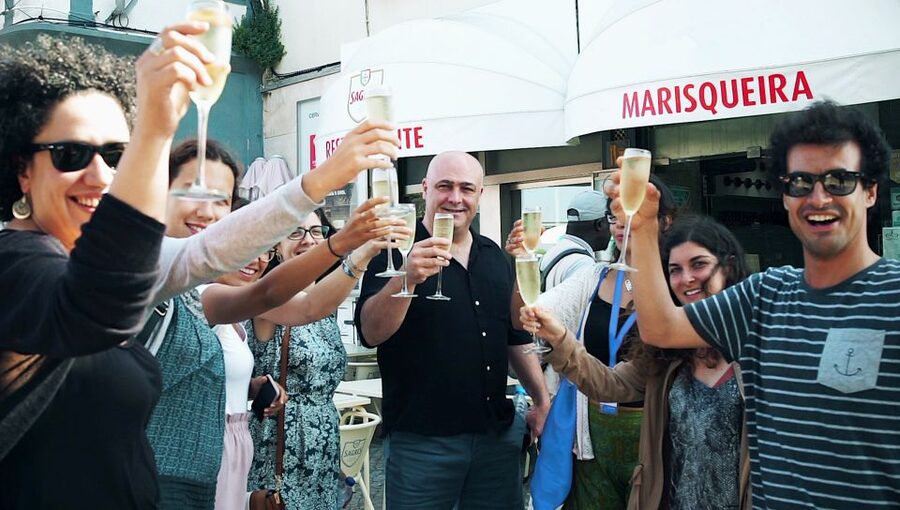
One of the best set pieces is the stop at Carmo Convent, where you get wide views of Lisbon. You’ll look out toward big-ticket landmarks, including São Jorge Castle and the Santa Justa Lift area.
You’ll also have a Portuguese beer here, which makes the viewpoint feel like a planned break rather than just a photo stop. It’s a good spot to catch your bearings. If you’ve been orienting yourself all trip, this is where the map finally snaps into place in your head.
Practical note
This is a viewing moment, not a deep inside-the-building visit. The tour doesn’t include guided visits inside monuments, so treat it as a chance to see, listen, and scan the city below you.
São Jorge area: short guided moments and big-location energy

You’ll get another guided moment around the São Jorge Castle area. Even though the time here is brief, it matters because it changes your relationship to the city. You go from street-level storytelling to skyline awareness, and it helps you understand Lisbon’s layout, especially if you’ve struggled with hills and sight lines so far.
This segment also benefits the flow. Lisbon is not flat, and long continuous walking can wear people down. By breaking things into short bursts, the tour keeps the energy more even.
Footwear matters
If you’ve noticed Lisbon pavements are slippery after a light rain, you’re not imagining it. Wear comfortable shoes with grip. The walking isn’t extreme, but you want secure footing.
Crossing the Tagus by ferry to Almada-side lunch views
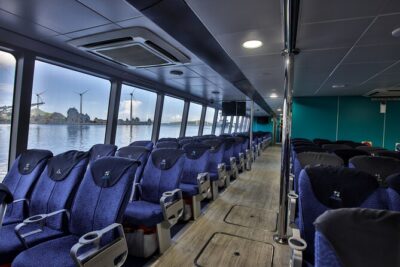
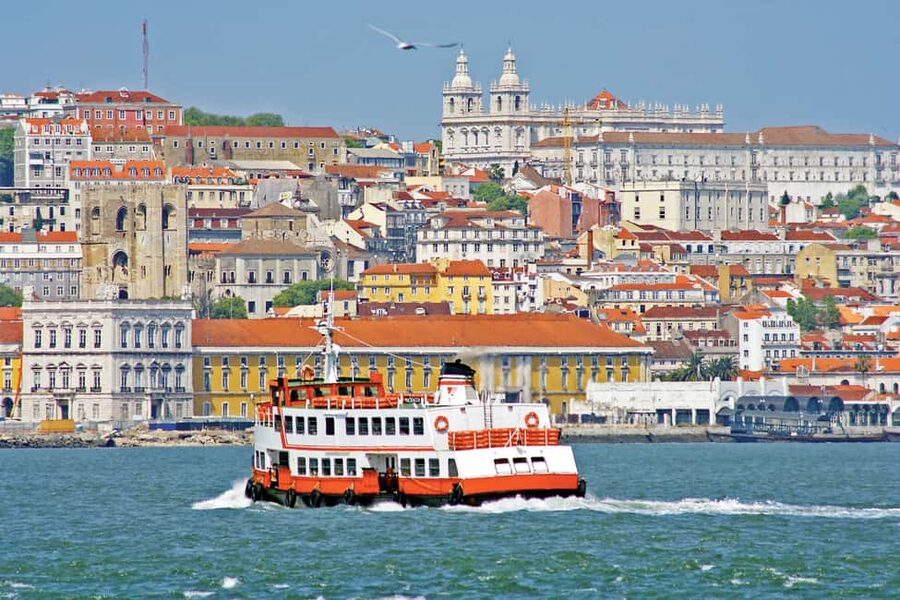
Then comes the shift: water, open air, and a different angle on Lisbon. You’ll take a scenic ferry ride across the Tagus River, with skyline views that don’t look the same from land. The ferry part is one of those simple changes that makes the whole day feel longer and more varied.
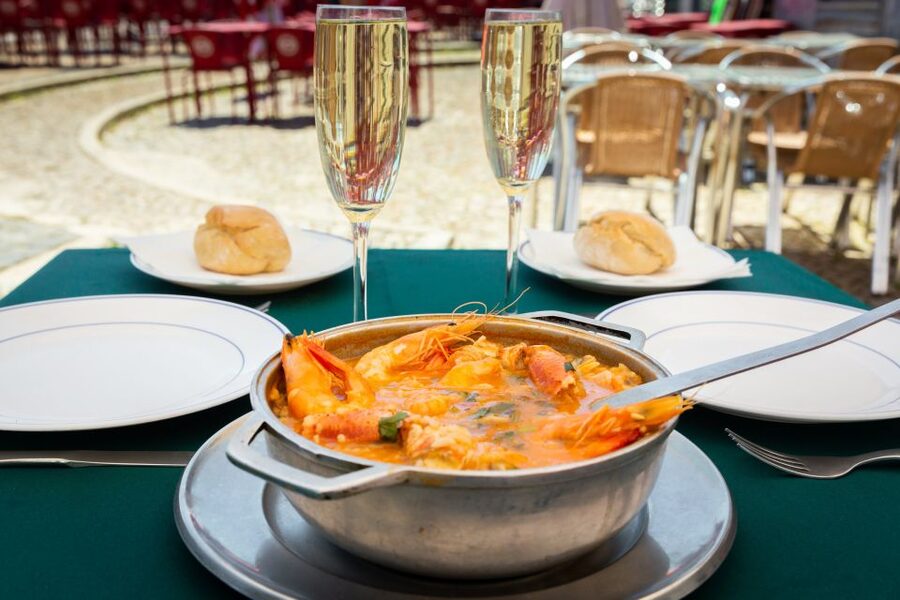
After the crossing, you’ll reach a riverside restaurant for lunch. This is where the tour delivers on its promise of mixing culture with food without turning lunch into a rushed transaction.
Why the ferry is worth it
You get perspective. From streets, Lisbon can feel layered but confusing. From the river, everything lines up: the hills, the sprawl, and the way neighborhoods stack. It’s a visual reset.
The seafood rice lunch and Vinho Verde payoff
Lunch is built around seafood rice and Vinho Verde, with wine included. It’s a traditional pairing that matches the river setting well. You’re not just eating for fuel. You’re eating as part of the day’s theme: Lisbon’s food culture tied to where people live and travel.
The timing also helps. By the time lunch arrives, you’ve walked enough to build appetite, but you’re not exhausted. That matters with a tour that’s only 4 hours total.
What I’d expect from the meal
It’s described as delicious and worth the price. At the same time, no meal is every person’s perfect favorite, and one highlight that stood out in feedback was that lunch was good but not spectacular for everyone. Still, the combination of a set menu plus the scenery and drinks is usually what gives this stop its value.
Price and what you actually get for $68
At $68 per person for a 4-hour, small-group experience, you’re paying for more than walking and storytelling. You’re also getting:
- Coffee and pastries
- A beer stop
- A ferry boat ride
- Wine plus a seafood rice lunch
When you price those items separately in Lisbon, the math starts to make sense. Even if you’d happily skip one or two extras on your own, the tour packages the essentials in a way that keeps the day moving and reduces decision fatigue. It’s not just sightseeing. It’s structured food-and-views time.
Small group size: why it matters
The group is limited to 9 participants. That size tends to make a big difference for comfort and attention. You’re more likely to hear the guide clearly, move as a unit, and actually interact if you have questions.
Walking logistics: hills, pace, and comfort basics

This is a walking tour, and Lisbon is Lisbon. You should expect hills and slippery pavement risk, especially if conditions are damp. I’d treat comfortable shoes as a non-negotiable item, not a suggestion.
The pace is designed to feel manageable. One comment noted there wasn’t much uphill climb, which is reassuring. But since the city can surprise you with steps and turns, plan for some uneven surfaces.
If you have mobility concerns, I’d think twice. This doesn’t sound like the kind of tour that has wheelchair-level flexibility, and it’s clearly set up for walking.
Who should book this and who should skip it
This tour fits best if you’re the type who likes Lisbon through neighborhood context, not just landmarks. If you care about traditional food, enjoy viewpoints, and want a ferry ride that adds variety, you’ll likely have a great time.
It’s also a smart pick for couples or friends who want a guided plan without losing the pleasure of wandering at a human pace.
Skip it if your diet is restrictive
This tour is not suitable for celiacs, vegans, Kosher, Halal, or pregnant women. For everyone else, dietary restrictions can be very difficult to accommodate because the tour visits traditional venues and alternatives may not be possible, including gluten free.
Skip it if you travel with pets
Pets aren’t allowed.
The trade-off: how the day balances Fado history, views, and food
Every tour has a rhythm, and this one has a clear flavor. It includes Moorish history elements, plus Fado background and the story of Maria Severa, but the day also centers on food stops and scenic moments.
That balance is a plus if you like the mix. If you’re the type who wants more museum-grade historical detail at every stop, you might wish for more frequent historical anchor points. In other words: it’s street-level storytelling and taste-led pacing, not a deep dive into every chapter of Lisbon’s past.
Also, if Fado history is not your top interest, you’ll want to know that the tour gives it meaningful attention.
Should you book this Lisbon traditions walk with ferry lunch?
I’d book it if you want a short, satisfying day that combines Mouraria storytelling, an easy downtown flow (Rossio, Baixa, Chiado), a great viewpoint (Carmo Convent), and the Tagus ferry + seafood rice lunch payoff. At $68, the included ferry and meal make it feel practical, not pricey.
I’d skip it if you need a gluten-free, vegan, celiac-friendly, or Halal/Kosher meal guarantee, or if you’re traveling during pregnancy. Also skip if your comfort with uneven, hilly sidewalks is limited.
If you match the food-and-views style of this tour, it’s one of those rare half-day plans that gives you variety without feeling chaotic.
FAQ
How long is the Lisbon Hidden Gems Walk: Traditions, Lunch & Ferry Ride?
It lasts 4 hours.
Where is the meeting point?
You meet at the main entrance of Hotel Mundial, at Martim Moniz Square.
What is the small-group size?
It’s limited to 9 participants.
What language is the tour guide?
The tour guide speaks English.
What’s included in the price?
Coffee and pastries, beer, a ferry boat ride, and wine with a seafood lunch are included.
What does the tour include for lunch?
You’ll have a traditional seafood rice lunch and Vinho Verde, with wine included.
Are guided visits inside monuments included?
No. Guided visits inside monuments are not included.
Can this tour accommodate celiac or vegan diets?
No. It is not suitable for celiacs or vegans.
Where does the tour finish?
It finishes at Cais do Sodré, Lisboa, Portugal.
What’s the cancellation policy?
Free cancellation is available up to 24 hours in advance for a full refund.