Galata Tower and Balat stairs make a great pairing. I love how this route strings together Galata’s skyline icon and Balat’s layered neighborhoods without feeling rushed. One thing to know up front: Galata Tower entry isn’t included, so you’ll likely pay that separately on the day.
What really makes this experience work is the pacing and the guide. With a professional English-speaking guide (and in one standout case, Enru’s patient, accommodating style), you get enough time to look closely at places like the Kamondo Stairs and SALT Galata, plus breaks to catch your breath. If you’re expecting only markets and photos, you might find the churches and institutional stops slower than a pure street-walk.
In This Review
- Key highlights before you go
- Galata Tower: the skyline icon that once watched for fire
- Kamondo Stairs: small steps, big design and a clear backstory
- SALT Galata: the serious stop that stays visitor-friendly
- Ferry timing: Karaköy Rıhtım and a quick view advantage
- Patriarchate of Constantinople: religion as city power
- Balat’s Colored Stairs: where you can see multiple communities overlap
- A key detail: what fires changed in Balat
- The Bulgarian Iron Church and the Golden Horn viewpoint
- Egyptian Bazaar: a sweet finish with practical tasting time
- Price and value: what you’re getting for about $105
- Who should book this Galata to Balat route?
- Should you book this tour?
- FAQ
- How long is the Galata Tower to Balat tour?
- How much does the tour cost?
- What’s included in the price?
- Is Galata Tower admission included?
- What language is the tour offered in?
- Where does the tour start and end?
- Is there free cancellation?
Key highlights before you go

- Galata Fire Tower context: how an old watchtower shaped today’s Istanbul silhouette
- Kamondo Stairs (1850s): Art Nouveau steps with a specific, story-rich origin
- SALT Galata inside stop: halls, talks, and a permanent exhibit tied to the Ottoman Bank Museum Collection
- Karaköy ferry ride: quick, scenic transportation with a Golden Horn setup
- Balat’s stair corridors: Jewish, Sephardic, and Byzantine layers you can feel in the streets
- Bulgarian Iron Church: prefabricated cast iron in Neo-Byzantine style, plus the Golden Horn viewpoint
Galata Tower: the skyline icon that once watched for fire
Start at Galata Tower, a landmark tied to Istanbul’s vertical skyline. This tower is considered among the oldest in the world, and the story adds real weight: it was used as a long-term fire watchtower, earning the name Galata Fire Tower. You’ll also learn it landed on the UNESCO World Heritage Temporary List in 2013, which is a nice clue that this isn’t just an old tower people pose by—it’s part of a recognized heritage conversation.
You get about 45 minutes here, which is the right amount for two things: first, getting your bearings from the base area and reading the tower’s role in the city’s shape. Second, if you choose to go up, you have a clean decision point. Just remember the timing works best when you’re not surprised by cost.
The main consideration is straightforward: your ticket for Galata Tower entry isn’t included. The tour still covers the stop and time to experience it, but you’ll need to budget extra if you want the inside viewpoint.
Kamondo Stairs: small steps, big design and a clear backstory
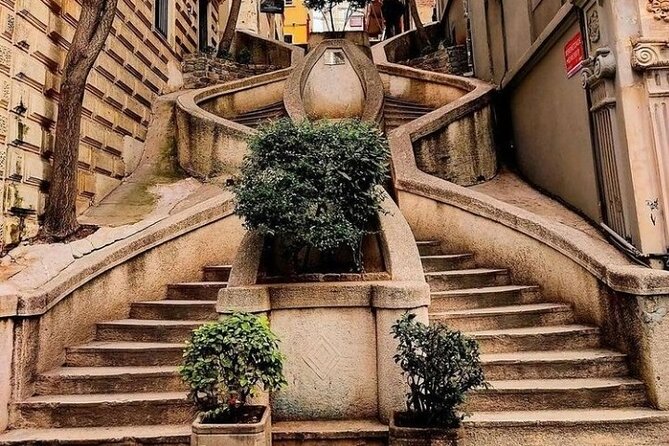
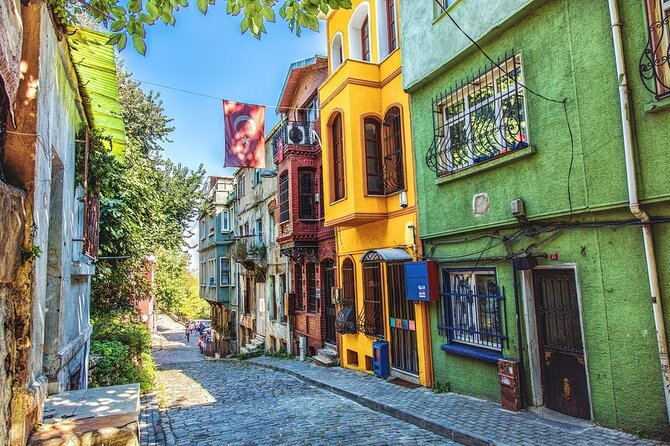
Right after Galata Tower, you head to Kamondo Stairs for around 15 minutes. These aren’t the kind of stairs you only walk past. They’re Art Nouveau-style, and they were completed in the 1850s. They were built by the House of Camondo, so it’s not anonymous street design—it’s tied to a real family legacy and the neighborhood’s growth in that era.
I like this stop because it’s compact and specific. When your day is packed, a 10–15 minute architectural moment is gold. Look at the details and the way the stairs act like a human-made connector—how Istanbul climbs and turns instead of staying flat like many cities.
If you’re sensitive to slopes, keep your pace steady. You’ll be walking, and these stair sequences can feel a bit more physical than you expect, even when the stop time is short.
SALT Galata: the serious stop that stays visitor-friendly
Next is SALT Galata, with about 20 minutes on site. This place is more than a lobby photo stop. It houses several spaces that make the whole complex feel like a working cultural institution: the Salt Research Gregory Michael Kiez Hall (a specialized library), the Salt Research Ferit F. Şahenk Hall (researchers can use it upon registration), and an Auditorium used for talks and conferences. There are also exhibition and event spaces.
What I find most useful for visitors: SALT Galata includes a permanent exhibition that traces the 145-year history of the institution, and it uses documents from the Ottoman Bank Museum Collection. Even if you only skim for 15–20 minutes, you’ll come away with context for why this area matters and how modern cultural spaces tie into older stories.
There’s no pressure to read everything. This is one of those stops where you can choose your own level of attention—wander, pick two things to focus on, and move on with your day.
Ferry timing: Karaköy Rıhtım and a quick view advantage
At Karaköy Rıhtım, you’ll take a ferry (about 20 minutes, with transportation included). This is practical, and it’s also scenic. Istanbul looks different from the water, and the water cuts down the walking stress while giving you a viewpoint shift.
It’s not just “getting there.” A ferry ride early in the route helps you set up later sightlines, because you start understanding the Golden Horn as a key geography feature rather than just a name on a map.
If you’re prone to motion sickness, take it slow while boarding, but this is generally a short ride within the tour structure.
Patriarchate of Constantinople: religion as city power
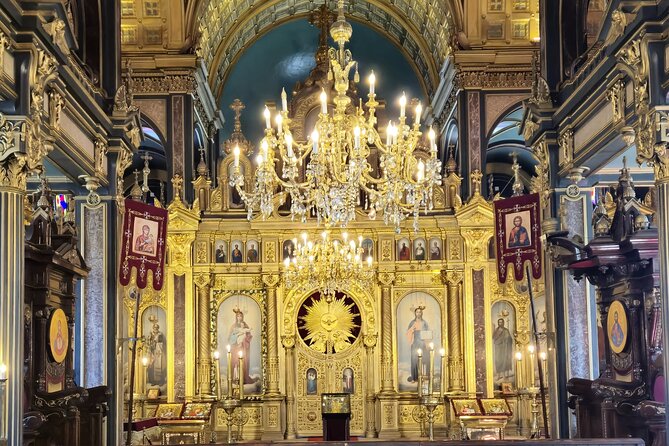
Then comes the Patriarchate of Constantinople, with about 30 minutes. This is the Ecumenical Patriarchate of Constantinople, led by the Ecumenical Patriarch. It’s one of the Eastern Orthodox Church’s autocephalous churches, typically described as 15 to 17 in that category, and the tour frames it clearly as an institution with structure, not a random old building.
I like this stop because it gives you a direct look at how faith institutions operate across time. Even if you don’t consider yourself religious, you’ll likely notice how much history and continuity are expressed through architecture and ceremonial space.
Also, the tour includes donations for churches, so you’re not showing up empty-handed. It’s a small detail, but it changes the tone from sightseeing-only to respectful visiting.
Balat’s Colored Stairs: where you can see multiple communities overlap
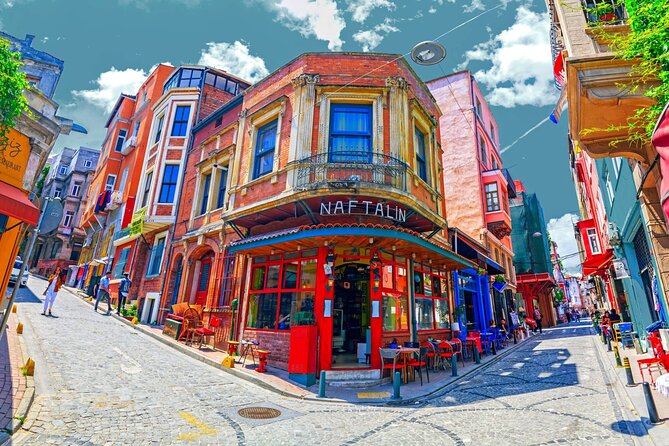
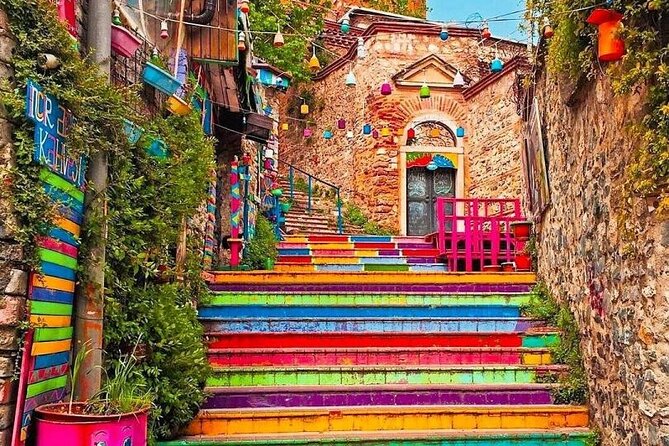
Balat starts with Balat Colored Stairs for about 15 minutes, then continues with more Colorful Stairs and the surrounding story for about 20 minutes. This is where Istanbul’s “layers” stop being a concept and start being visible on the street.
Balat is described as a place of cute cafés, colorful streets, and houses that feel connected to older life. But the most important part is the community history. The area has a Byzantine heritage, and it also became associated with an old Jewish neighborhood with a large Jewish population. The Sephardim, who were exiled from Spain in the 15th century, settled here.
If you want a reason this tour route works for real life: these stairs and stair streets are the kind of places you remember because they force you to move slowly. You pass doorways, small facades, and side alleys—enough variety to make the route feel like a neighborhood, not a checklist.
A key detail: what fires changed in Balat
One of the most practical pieces of local context here is how the buildings evolved. Before the 18th and 19th centuries, many houses were wooden, but repeated fires led to the preference for masonry buildings. That’s part of why the architecture you see today feels sturdier and why some of the typical building patterns look the way they do.
The tour notes that there are very few single-story buildings and homes are often built in twos or threes. That helps you “read” the streets as a pattern rather than isolated structures.
This area is also protected as a UNESCO World Heritage Site, which is another reason this isn’t just about pretty walls.
The Bulgarian Iron Church and the Golden Horn viewpoint
From Balat, you go to Saint Stephen’s Bulgarian Orthodox Church (about 25 minutes). It’s also known as the Bulgarian Iron Church, and the highlight isn’t subtle. The church is famous for being made from prefabricated cast iron elements in a Neo-Byzantine style. That combination—industrial material and Byzantine design language—makes it an eye-catching stop and a good reminder that “old Istanbul” also includes surprising engineering choices.
This church belongs to the Bulgarian Christian minority in the city. That detail matters because it explains why the church looks and feels specific, rather than just decorative.
Then you head to the Golden Horn (about 20 minutes). The stop is set up to let you watch the European and Anatolian sides from the estuary. I like viewpoints like this because they give you a clean mental reset. You’ve been reading streets, stairs, and buildings; then suddenly you’re seeing the whole city geography in one frame.
This is also a strong photo stop, but you don’t have to treat it like a photo hunt. Even just watching for a few minutes helps the rest of the day click.
Egyptian Bazaar: a sweet finish with practical tasting time
Finally, the route ends at the Egyptian Bazaar (around 30 minutes). It’s one of the oldest bazaars in Istanbul, and the tour keeps the ending friendly: you’ll taste Turkish dessert and drinks for free.
This matters because it turns the final stop into a relaxed payoff instead of another rushed market sprint. You’re not just walking through stalls; you’re also getting a moment to slow down and enjoy small bites while you decide what (if anything) you want to buy later on your own time.
The tour ends at Egyptian Bazaar near Spicy Bazaar, which is handy if you want to keep wandering after the official route.
Price and value: what you’re getting for about $105
At $105 per person, this tour sits in the mid-range for Istanbul walking-plus-transport. The value is strongest when you notice what’s included:
- A professional English-speaking guide
- Mobile ticket access for the tour itself
- Transportation by ferry
- Free tasting for drinks and dessert
- Donations for churches
- Admission included for multiple stops (everything listed except the Galata Tower entry ticket)
So you’re paying for time, guidance, and getting ferried across the water—plus built-in visits that would take effort to coordinate on your own. The one extra cost to plan for is clear: if you want to go inside Galata Tower, you’ll likely pay that admission separately.
In short: if you like structure and want a route that covers different Istanbul moods in one go, this price makes sense.
Who should book this Galata to Balat route?
This tour suits you best if:
- You want a neighborhood-focused route that mixes architecture, churches, and street scenes
- You like photos, but also want real context for what you’re seeing
- You’re happy with a day that includes indoor/institution stops like SALT Galata, not just outdoors
It may feel a little long for you if you dislike walking between viewpoints and stair areas. Most people can participate, but the route includes multiple stair and street segments, so comfortable shoes are not optional.
This is also a good fit if you want a more personal experience: the tour is private for your group, so you’re not fighting a huge crowd in narrow streets.
Should you book this tour?
I’d book it if your ideal Istanbul day looks like a stitched-together story: a watchtower landmark, a designer stair stop, a cultural institution, a ferry crossing, the Patriarchate, then Balat’s colored streets and the Bulgarian Iron Church, finishing with a dessert-friendly market hit.
Skip it only if you’re mostly after a single big attraction and want minimal walking, or if you already know you’ll never pay for an extra Galata Tower entry and you hate the idea of a stop that’s mostly exterior.
If you want a route with both views and meaning, this one does the job.
FAQ
How long is the Galata Tower to Balat tour?
It runs about 4 to 6 hours.
How much does the tour cost?
The price is $105.00 per person.
What’s included in the price?
It includes a professional English-speaking guide, mobile ticket, free tasting for drinks and dessert, ferry transportation, and donations for churches. Admission is included for the stops listed in the tour details.
Is Galata Tower admission included?
No. Galata Tower entry ticket is not included.
What language is the tour offered in?
The tour is offered in English.
Where does the tour start and end?
It starts at Tünel Meydanı Sokağı Şahkulu, Tünel Meydanı Sok., Beyoğlu and ends at the Egyptian Bazaar, Rüstem Paşa, 34116 Fatih, near Spicy Bazaar.
Is there free cancellation?
Yes. You can cancel up to 24 hours in advance for a full refund.