
REVIEW · FREDERICK
Harpers Ferry Audio Tour History, Ruins and River Views
Book on Viator →Operated by Drives & Detours · Bookable on Viator
Harpers Ferry has layers. This audio walk lets you follow them at human speed.
I like that it’s built for pacing: you can stop, read markers, and keep going when you feel ready. I also like the way the Appalachian Trail shows up in the story, from the Appalachian Trail Conservancy hub to the cliffside Appalachian Trail Staircase, giving the town an extra dimension beyond Civil War headlines.
One thing to plan for: this is a walking route with some uphill sections, and it can feel long if you’re hoping to do it mostly flat or by hopping between stops.
In This Review
- Quick Highlights Before You Go
- Why This Harpers Ferry Audio Walk Works
- Price and Value: What $9.99 Buys You (and What It Doesn’t)
- Getting Oriented: Start at Lower Town Train Station
- Practical tip I’d follow
- The Route: Stop-by-Stop (and What to Watch For)
- Stop: Appalachian Trail Conservancy Headquarters
- Stop: African American History Museum (closed for renovations)
- Stop: Harper Cemetery
- Stop: US Armory Site
- Stop: Harpers Ferry Historical Museum
- Stop: Jefferson Rock
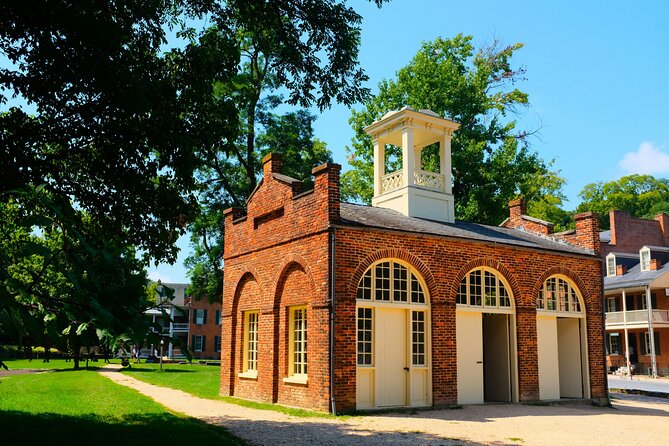
- Stop: John Brown’s Fort
- Stop: Lockwood House
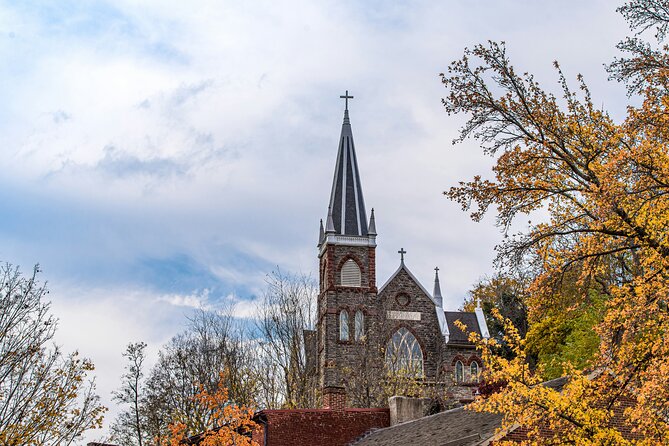
- Stop: St. Peter’s Roman Catholic Church
- Stop: Storer College Campus
- Stop: The Point (Potomac and Shenandoah Rivers)
- Stop: Virginius Island, West Virginia
- Stop: White Hall Tavern
- Stop: Murphy Farm
- Stop: Bolivar Heights
- Stop: Harpers Ferry Public Square
- Stop: Lower Town Train Station
- Stop: Original Site, Shenandoah River Bridge
- Stop: Appalachian Trail Staircase
- Stop: Arsenal Square
- Walking Layout: Pace Yourself (and Expect Hills)
- The App Experience: Location-Based Audio and Map Friction
- The Weather Factor: Cold Day, Warm Feeling
- Who Should Book This Audio Tour?
- Should You Book? My Take
- FAQ
- How long is the Harpers Ferry audio tour?
- How much does it cost?
- Where does the tour start?
- Does the tour end at the same place?
- What language is the audio in?
- Do I need to bring my own smartphone?
- Is cell service needed?
- Are there any stops with free admission?
- Is everything open right now?
- What are the operating hours?
- Cancellation
Quick Highlights Before You Go
- Auto-start audio helps you link each story to the exact spot you’re standing in
- Lower Town Train Station is a strong starting anchor for the full route flow
- 19 stops cover abolition, Reconstruction education, industrial ruins, and river geography
- Free admission is listed for every stop where an admission ticket would normally be needed
- Download ahead because cell service can be unreliable in town
- One museum stop tied to African American history is closed for renovations
Why This Harpers Ferry Audio Walk Works
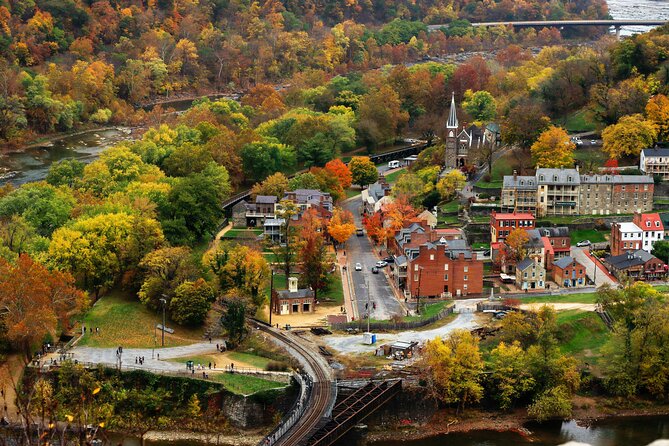
Harpers Ferry isn’t one story. It’s commerce and conflict, freedom movements and education, rivers that powered factories and carried people in and out. This tour does a good job of treating those themes like a sequence you can actually experience on foot.
Instead of making you rush between photos, the audio format gives you a guided “thread.” That matters here because so many sites sit on different levels above and around the town. When your information arrives right as you reach a place, the geography starts to make sense fast.
And because it’s a mobile-ticket audio tour, you’re not stuck in a group rhythm. You can linger at a view, backtrack a few steps, or take a breather without apologizing to anyone.
Price and Value: What $9.99 Buys You (and What It Doesn’t)
At $9.99 per person for about 2 hours, this is priced like a practical add-on rather than a full-day, big-bus excursion. The value comes from two parts:
- You get the app and tour download, plus an audio guide you can replay through unlimited access
- Every stop listed includes free admission (so you’re not paying separate museum fees as you go)
What you supply is the obvious but important item: your smartphone. There’s no phone provided, and you’ll want it ready before you start.
Also, you should know the “shape” of the experience: it’s self-guided, so you’re the navigator. That’s great for flexibility, but it also means you’ll want to pay attention to when the route asks you to move to a new section.
Getting Oriented: Start at Lower Town Train Station
The tour starts and ends back at Lower Town Train Station, at 182 Potomac St, Harpers Ferry, WV 25425. That’s helpful, because once you’re done you’re not trying to figure out where you parked or where you’ll hop on a bus.
You also need to treat this like an offline-first experience. The tour instructions specifically warn that cell service is spotty at best, and the guidance is clear: download before you go. If you forget, you might still get lucky, but you’re taking a gamble in a place where the signal can drop right when you most want it.
Practical tip I’d follow
On the day you go, I’d plan to arrive with enough time to check your phone setup before you press start. One review described the process as easy once they got to the starting location and pushed start, so give yourself a couple of minutes to get that moment working smoothly.
The Route: Stop-by-Stop (and What to Watch For)
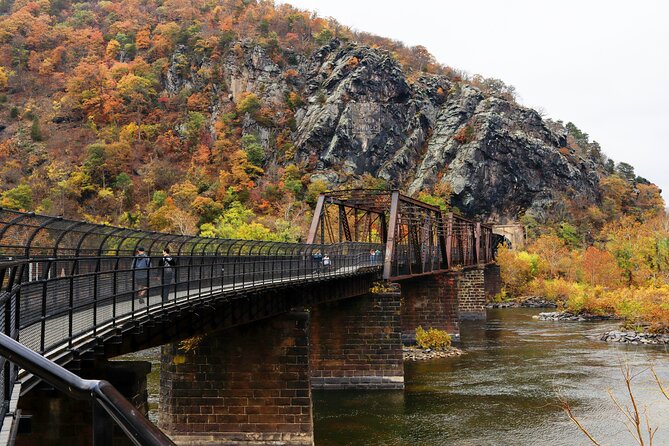
This route moves through Lower Town, higher overlooks, and the riverfront areas. Expect a mix of viewpoints, small historic structures, and sites where only foundations remain.
Below is what each stop adds, plus the one caution I’d keep in mind as you move through it.
Stop: Appalachian Trail Conservancy Headquarters
This is a welcome opener that points you to the Appalachian Trail’s symbolic midpoint. If you like hiking culture, you’ll appreciate how the trail isn’t treated like a side note—it’s part of how the region’s identity is explained.
Why it’s worth it: it sets a framework. Once the trail context is in your head, later places like the AT staircase start feeling less random and more meaningful.
Stop: African American History Museum (closed for renovations)
There’s an important museum stop in the middle of the story focusing on African Americans—enslaved people, freed people, education, and resilience. The catch: the museum is currently closed for renovations.
What to do: if this is a must-see for you, plan around the closure by spending a bit more time at the other education-focused sites nearby, like Storer College (next). You won’t get the intended exhibit there, but you’ll still get the bigger narrative thread.
Stop: Harper Cemetery
High above the town, this is quiet and reflective, with sweeping views. It’s the kind of place where the scenery matters because it reinforces how Harpers Ferry sits in the larger terrain—above the action, looking out on it.
Caution: cemetery paths can be uneven. Wear shoes with grip.
Stop: US Armory Site
This is where the story gets sharp. Once a major U.S. weapons factory, it became a flashpoint for John Brown’s raid. Today you mostly see foundations, but the audio helps you imagine what used to stand here.
How to use this stop: don’t treat it like an empty lot. Let the story rebuild the scale in your mind.
Stop: Harpers Ferry Historical Museum
Inside an old building in Lower Town, this museum offers hands-on exhibits and “eclectic artifacts” that cover everyday life as well as epic events.
If you’re short on energy later, this is a good stop to ensure you still get tactile context without needing to drive or navigate more complicated terrain.
Stop: Jefferson Rock
Named for Thomas Jefferson, this cliffside perch is famous for a reason: you get one of the region’s iconic views.
What to watch for: keep an eye on the way the terrain funnels movement. That’s the kind of geography that explains why Harpers Ferry mattered so much.
Stop: John Brown’s Fort
A modest brick building that was once the fire engine house and became the final stronghold of John Brown’s abolitionist stand. The audio framing helps you understand why small structures here can carry intense weight.
Why it works as an audio stop: the tension comes from what you’re meant to feel as you read the timeline while standing at the place.
Stop: Lockwood House
This stately home ties into Union officers and educators, and it also connected to the leadership of Storer College. In other words, it’s not just a military stop—it’s a link between strategy and the rise of Black education.
Stop: St. Peter’s Roman Catholic Church
This stone church sits on a hillside with a dramatic overlook. It served Irish immigrant families and, according to the tour info, was spared during the Civil War.
If you like architecture with a story, this is a good pause before you head back into education and Reconstruction-era themes.
Stop: Storer College Campus
Storer College was founded after the Civil War to educate formerly enslaved individuals, and it became a beacon of hope and empowerment in the Reconstruction period.
This stop is especially meaningful if you want Harpers Ferry to be more than a battlefield checklist. You get education as an ongoing struggle, not just a background detail.
Stop: The Point (Potomac and Shenandoah Rivers)
This is the big geography moment: the meeting place of the Potomac and Shenandoah Rivers. The audio emphasizes how geography, trade, and strategy converged here.
This is where the whole route starts to click. The rivers explain a lot: industry, movement, and why people kept trying to control this space.
Stop: Virginius Island, West Virginia
A peaceful area now, but once a bustling industrial village. The tour points out the moss-covered ruins and trails and frames them around the rise and fall of Harpers Ferry’s water-powered economy.
If you like industrial history, you’ll appreciate seeing how “quiet today” used to mean “active and functional” not long ago.
Stop: White Hall Tavern
A 19th-century tavern that served travelers, locals, and even Union soldiers. It’s a place for imagining daily life: pints poured, politics debated.
This stop breaks up the heavier sites with something human-scaled. It helps the town feel inhabited, not just memorialized.
Stop: Murphy Farm
A peaceful landscape with a turbulent past: it was once a battlefield and later a site for powerful Civil Rights speeches. Today it’s for reflection, with panoramic views.
Why it’s a strong mid-to-late stop: it connects Civil War conflict to later civil rights struggles, without pretending the timeline is the same thing as the timeline’s effects.
Stop: Bolivar Heights
A major fought-over ridge in Civil War history. You’re not just looking at scenery here—you’re looking at why armies cared about this exact terrain.
Caution: ridges can be windy and exposed. If weather is rough, keep your phone secure and bring a layer.
Stop: Harpers Ferry Public Square
The heart of town life for centuries. You’ll get a sense of markets, militias, protests, and parades, and how the space still gathers people.
This stop is good for resetting your energy before you move back toward the station area.
Stop: Lower Town Train Station
The station connects Harpers Ferry to the region’s rail legacy and reminds you that this small town was once a major transit hub.
It’s a practical stop too: by now you know where you are, and it reinforces the route’s logic.
Stop: Original Site, Shenandoah River Bridge
This is the origin story moment: Robert Harper’s 18th-century ferry launched the town that became a crossroads of commerce, conflict, and change.
If you want one stop that explains why the town exists at all, this is it.
Stop: Appalachian Trail Staircase
Carved into the cliffside, this stairway connects Lower Town to the Appalachian Trail. The audio frames it as steep and symbolic of what the trail demands.
Practical caution: treat this as the toughest walking segment on the route. One review noted the hike was too much for them to finish, so if you’re sensitive to uphill climbs, plan to take it slowly or skip if needed.
Stop: Arsenal Square
Once the site of a sprawling U.S. arsenal and the charged starting area tied to John Brown’s raid. Today, it can feel quiet, but the story restores its tension.
This is a strong closer because it brings you back to the raid narrative one last time before you head back to the start point.
Walking Layout: Pace Yourself (and Expect Hills)
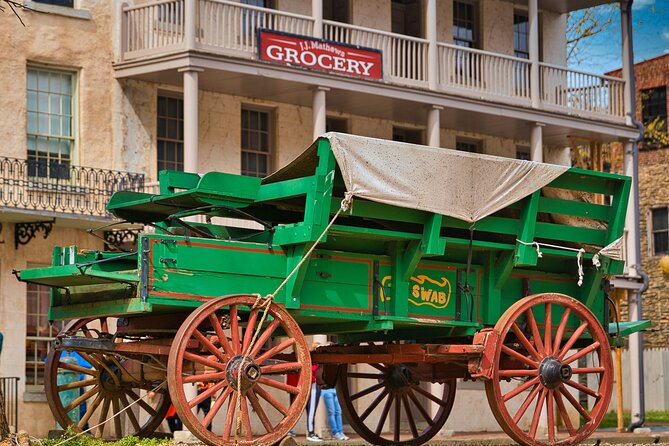
The route is designed to be walked, and that’s part of the charm. But not everyone will love it.
One review flagged an awkward layout for seeing places on foot, and another mentioned the distance felt too far and that a trolley would have helped. Based on the route’s mix of Lower Town and cliff/height overlooks (Jefferson Rock, Bolivar Heights, Harper Cemetery, Appalachian Trail Staircase), it’s wise to plan for a lot of steps.
My suggestion: wear shoes you trust on uneven ground. If you want to make this feel easy, start early in the day when legs are freshest.
The App Experience: Location-Based Audio and Map Friction
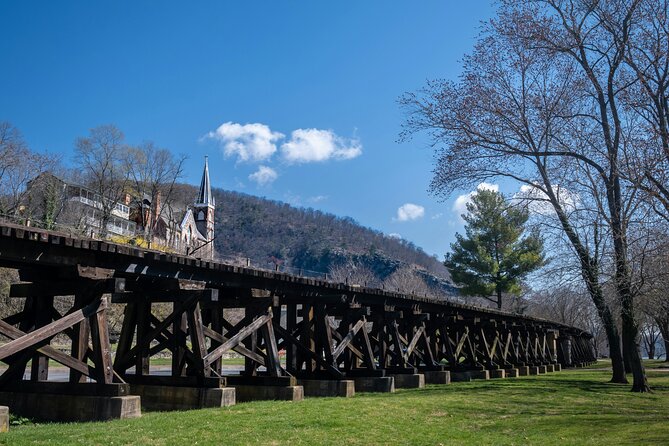
This tour leans on a smart feature: the audio recognizes where you are and provides the right information at the right stops. Reviews highlighted auto-start behavior and how it supports your pace.
That’s the win. The other side is that the app’s interface can be a little clunky. One review criticized the map and start flow, saying it should make it easier to find the map and allow starting based on nearest parking. The good news: the provided guidance says you can technically start from any location, but the story flows best when you do it in order.
So here’s the practical compromise: start at Lower Town Train Station as directed, and don’t try to improvise your route unless you’re confident with your phone.
The Weather Factor: Cold Day, Warm Feeling
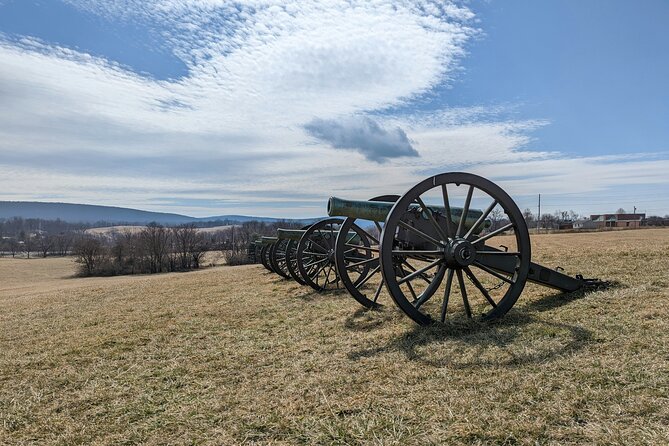
Harpers Ferry weather can turn fast. Even when it’s cold, this kind of self-guided history route can leave you with that satisfying feeling of having understood more than you expected.
The audio format helps because it doesn’t just list events. It connects what you see to why it mattered. So if you’re going on a cooler day, bring layers and keep moving between stops, rather than stopping too long in wind.
Who Should Book This Audio Tour?

This is a strong fit if you want:
- Flexible pacing without a schedule pressure
- An audio-guided way to connect Harpers Ferry’s layers: abolition, education, Civil War geography, and river economics
- A route that’s easy to repeat later thanks to unlimited access
It’s not the best fit if:
- You dislike uphill walking or stair-heavy terrain
- You’re relying on car movement between far-apart stops and don’t want to walk between them
- You expect a slick, beginner-proof app map experience with zero friction
Should You Book? My Take
If you’re curious about Harpers Ferry’s role as a crossroads—especially the way John Brown’s raid, Reconstruction education at Storer College, and the river-and-industry story all connect—this tour is good value. The $9.99 price is low enough that you can treat it as a smart way to “hear the place” without adding major costs.
I’d book it when you’re comfortable walking 2 hours, ready to download the tour ahead of time, and okay starting at the Lower Town Train Station so the narrative flows properly.
If you’re on the edge about walking distance or uphill sections, I’d reconsider or plan a shorter version by skipping the steep segments like the Appalachian Trail Staircase. This route is meaningful, but it’s still a route.
FAQ
How long is the Harpers Ferry audio tour?
The tour is approximately 2 hours.
How much does it cost?
It costs $9.99 per person.
Where does the tour start?
It starts at Lower Town Train Station, 182 Potomac St, Harpers Ferry, WV 25425.
Does the tour end at the same place?
Yes, it ends back at the meeting point (Lower Town Train Station).
What language is the audio in?
The tour is offered in English.
Do I need to bring my own smartphone?
Yes. A smartphone is not included.
Is cell service needed?
Cell service is spotty at best, so you should download the tour before you go.
Are there any stops with free admission?
The tour info lists free admission for the stops included.
Is everything open right now?
The museum stop that focuses on African American history is currently closed for renovations.
What are the operating hours?
Daily hours are 8:00 AM to 8:00 PM (for the stated date range).
Cancellation
Free cancellation is available up to 24 hours before the experience start time, with refunds depending on when you cancel.